
Choosing the right masking tape is important for achieving clean, efficient, and reliable results in industrial applications. Whether the tape is being used for painting, surface protection, temporary holding, marking, or finishing work, its adhesive performance and suitability for the application can directly affect the overall process.
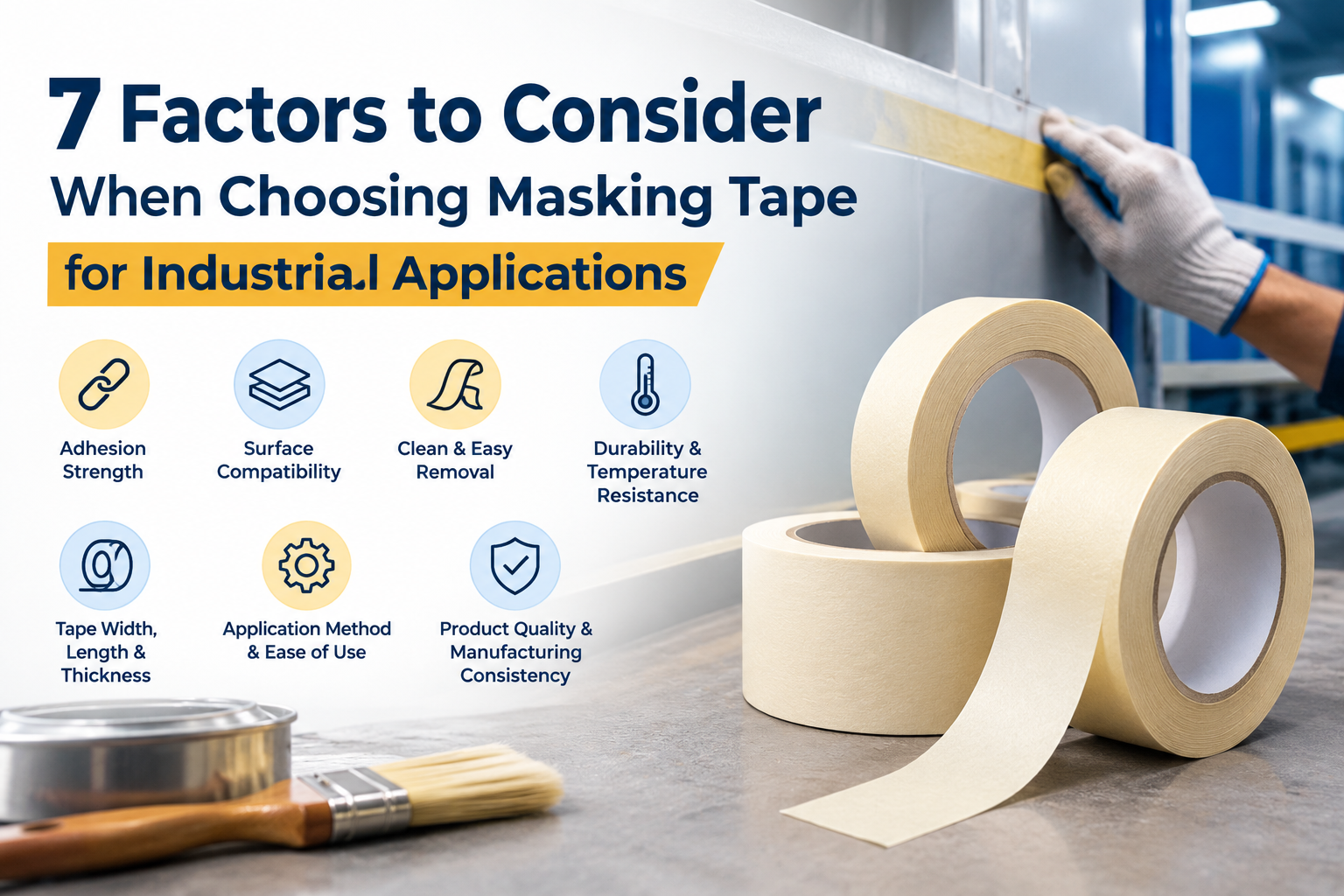
When evaluating a masking tape manufacturer in Gujarat, businesses should look beyond price and consider factors such as adhesion strength, surface compatibility, clean removal, durability, dimensions, application method, and manufacturing consistency. The right masking tape should match the working environment as well as the surface and process where it will be applied.
Why Choosing the Right Masking Tape Matters
Masking tape may look like a simple adhesive product, but different applications can require different performance characteristics. A tape suitable for a basic indoor painting job may not necessarily be appropriate for an industrial finishing process.
Industrial users often need masking tape that can adhere properly to a particular surface, remain in place during the application process, and be removed without creating unnecessary residue or affecting the finished surface.
The selection process should therefore begin by understanding the application. Consider the surface, working conditions, required holding time, removal requirements, tape dimensions, and method of application before selecting a product.
1. Adhesion Strength
Adhesion is one of the first factors to consider when choosing masking tape.
The tape needs to maintain sufficient contact with the surface so that it does not lift, move, or lose its position during the intended application. However, extremely strong adhesion is not automatically better. The required adhesive strength depends on the surface and the purpose for which the tape is being used.
For example, a temporary masking application may require reliable holding with relatively easy removal, while certain industrial applications may require stronger adhesion during processing.
A good selection should therefore balance:
- Secure adhesion
- Consistent holding performance
- Easy application
- Suitable removal characteristics
- Compatibility with the intended surface
Businesses should communicate their application requirements to the tape supplier instead of selecting a product based only on adhesive strength.
2. Surface Compatibility
The surface on which masking tape will be applied is another important consideration.
Different surfaces can have different textures, finishes, cleanliness levels, and adhesion characteristics. Masking tape may be used on surfaces such as painted materials, metal, glass, plastic, wood, and other substrates depending on the application.
Before selecting a tape, consider:
- Is the surface smooth or textured?
- Is it painted or unpainted?
- Is the surface clean and dry?
- Will the tape remain in place for a short or extended period?
- Could the adhesive interact with the surface coating?
Surface preparation can also influence tape performance. Dust, oil, moisture, loose particles, or other contaminants can affect adhesion.
A suitable masking tape should be selected according to the specific surface and working conditions rather than assuming that one tape will perform identically on every material.
3. Clean and Easy Removal
Removal is particularly important in painting, finishing, and surface protection applications.
A masking tape may perform well during application but still create problems if it leaves unwanted adhesive residue or becomes difficult to remove. Clean removal can help reduce additional cleaning work and support a smoother finishing process.
For applications where clean edges are important, the tape should remain properly positioned during the process and be removable according to the requirements of the application.
When evaluating a product, businesses should consider:
- Ease of removal
- Adhesive residue
- Surface condition after removal
- Required removal timing
- Overall finishing requirements
The appropriate removal characteristics depend on the adhesive system, surface, environmental conditions, and duration of application.
4. Durability and Temperature Resistance
Industrial environments can expose adhesive tapes to different operating conditions. Depending on the application, the tape may encounter heat, moisture, dust, handling, pressure, or other environmental factors.
For this reason, durability should be considered before purchasing masking tape for industrial use.
If the tape is being used during a process involving elevated temperatures, businesses should specifically check whether the selected product is appropriate for those conditions. Similarly, applications involving environmental exposure may require consideration of the tape’s resistance characteristics.
Important questions include:
- What temperature will the tape encounter?
- How long will the tape remain applied?
- Will it be exposed to moisture?
- Will the surface experience handling or movement?
- Is the application indoors or outdoors?
Choosing according to actual operating conditions can help avoid unexpected tape failure during the process.
5. Tape Width, Length and Thickness
Physical dimensions also matter when selecting masking tape.
The appropriate width depends on the area that needs to be covered or protected. Narrow tape may be useful for smaller areas or detailed work, while wider tape can be more suitable when a larger area needs to be masked.
Roll length is another consideration, particularly for businesses using tape regularly or in high-volume applications. Choosing appropriate roll sizes can help support smoother workflow and reduce unnecessary interruptions for roll replacement.
Thickness can also influence handling and application characteristics.
Before placing a bulk order, businesses should consider:
- Required tape width
- Roll length
- Thickness
- Packaging format
- Storage requirements
- Application equipment
The right dimensions should be determined by the actual process rather than selecting a standard size without evaluating the application.
6. Application Method and Ease of Use
How the tape will be applied is another important factor.
Some applications are handled manually, while industrial operations may use tools or equipment to improve application speed and consistency. The tape should be practical for the intended application method.
For manual applications, ease of handling, unwinding, cutting, and positioning can be important. For larger operations, businesses may also need to consider compatibility with the equipment being used.
An efficient masking tape solution should support the workflow rather than making application unnecessarily complicated.
Before selecting a product, consider:
- Manual or machine application
- Application speed
- Cutting requirements
- Roll handling
- Storage and dispensing
- Frequency of use
Understanding the complete application process can make product selection more effective.
7. Product Quality and Manufacturing Consistency
For businesses purchasing masking tape regularly, consistency can be just as important as the performance of an individual roll.
Manufacturing consistency can help businesses maintain predictable results across repeated applications. Variations in adhesive performance, tape construction, dimensions, or winding can affect how easily the product is used.
When selecting a supplier, businesses can evaluate factors such as:
- Product consistency
- Adhesive performance
- Roll quality
- Packaging
- Supply capability
- Product range
- Ability to understand application requirements
Working with a manufacturer that understands industrial packaging and adhesive tape requirements can make regular procurement easier.
How to Choose a Masking Tape Manufacturer in Gujarat
Businesses searching for a masking tape manufacturer in Gujarat should first identify their actual product requirements.
Instead of selecting a supplier only because of a low price, consider whether the manufacturer can provide a product suitable for the intended application and whether the supply can remain consistent for regular requirements.
Some useful points to evaluate include:
Understand Your Application
Clearly explain where and how the tape will be used. Mention the surface, application process, expected holding time, and removal requirements.
Check Product Options
A manufacturer with different tape options may be able to help businesses identify a product more closely suited to their application.
Discuss Bulk Requirements
If the tape is required regularly, discuss order quantities, packaging, supply schedules, and other procurement requirements in advance.
Consider Quality Consistency
For commercial and industrial operations, consistent product performance can be important because repeated processes often require predictable results.
Ask About Custom Requirements
Depending on the manufacturer and product range, businesses may have specific requirements related to dimensions, packaging, or other product characteristics.
Common Applications of Masking Tape
Masking tape can be used across a variety of applications depending on its construction and adhesive characteristics.
Painting and Surface Protection
Masking tape is commonly associated with painting applications where specific areas need to be protected during painting or finishing work.
Industrial Finishing
In industrial environments, masking tape may be used as part of surface preparation and finishing processes where temporary masking is required.
Automotive Applications
Certain masking tape products can be used in automotive-related painting and finishing processes, subject to their specifications and suitability.
General Manufacturing
Manufacturing operations may use adhesive tape for temporary holding, masking, marking, or process-related applications.
Temporary Protection and Marking
Depending on the product, masking tape can also support temporary identification, positioning, or surface protection requirements.
Common Mistakes to Avoid When Selecting Masking Tape
Selecting masking tape only on the basis of price can create problems if the product is not suitable for the application.
Choosing Without Checking the Surface
A tape that works well on one surface may not provide the same performance on another. Surface compatibility should always be considered.
Ignoring Removal Requirements
If clean removal is important, businesses should consider the adhesive and application conditions before selecting a product.
Selecting the Wrong Adhesion Level
Too little adhesion can cause the tape to lose its position, while unsuitable adhesive characteristics can make removal more difficult.
Ignoring Working Conditions
Temperature, moisture, duration, and handling conditions can influence tape performance.
Buying Without Understanding the Application
A clear understanding of the application makes it easier to communicate requirements to the manufacturer or supplier.
Frequently Asked Questions
What is masking tape commonly used for?
Masking tape is commonly used for painting, surface protection, temporary holding, marking, and various industrial and finishing applications. The appropriate product depends on the surface and working conditions.
How do I choose the right masking tape for an industrial application?
Consider the surface, required adhesion, removal requirements, operating conditions, tape dimensions, application method, and expected duration of use.
Why is adhesive strength important in masking tape?
Adhesive strength helps determine how well the tape stays attached to the intended surface. The required level depends on the application and should provide suitable holding without creating unnecessary removal issues.
How can I avoid adhesive residue after removing masking tape?
Choose a tape appropriate for the surface and application conditions, and follow the manufacturer’s recommended application and removal practices.
What should I check before buying masking tape in bulk?
Check the product’s suitability for your application, dimensions, quality consistency, packaging, supply capability, and any specific requirements before placing a bulk order.
How do I choose a masking tape manufacturer in Gujarat?
Look for a manufacturer that can understand your application requirements, provide suitable product options, maintain consistent quality, and support your regular or bulk packaging requirements.
Final Thoughts
Choosing the right masking tape requires more than simply selecting a roll based on price or availability. Adhesion strength, surface compatibility, clean removal, durability, dimensions, application method, and manufacturing consistency can all influence whether a tape is suitable for a particular industrial process.
Businesses should first understand their application requirements and then discuss those requirements with a suitable manufacturer or supplier. This approach can help identify a masking tape solution that fits the surface, process, and operating environment.
For businesses looking for a masking tape manufacturer in Gujarat, evaluating product suitability, quality consistency, supply capability, and application requirements can help create a more reliable purchasing process.
If you are looking for masking tape for industrial, commercial, painting, finishing, or surface protection requirements, Contact Flexibond Industries Pvt Ltd to discuss your tape requirements and bulk packaging needs.
No comment yet, add your voice below!